
Dr. Manish Agarwal
Speciality: Diabetology
MBBS, MD, PhD Diabetes, Founder and Director of Medilink Hospital and Research Center, a premier diabetes care institution in Ahmedabad. He holds a first-class postgraduate program in Diabetology from the Medical Educational and Scientific Foundation of New York Inc and Johns Hopkins University School of Medicine. He is a Fellow of the Royal College of Physicians (Glasgow), American College of Physicians, Indian College of Physicians, and Endocrine University of South Wales (UK). Certified by the American Thyroid Association, he also serves as HOD of Medicine and Center for Diabetes, Thyroid, Endocrinology, and Metabolic Disorders at Medilink. He has led numerous national and international clinical trials and published widely. A trustee, professor, former president of the Association of Physicians of Ahmedabad, and community health advocate, he was honored with fellowships from the World Congress of Chronomedicine and Indian Hypertension Society.
Related Content
Video
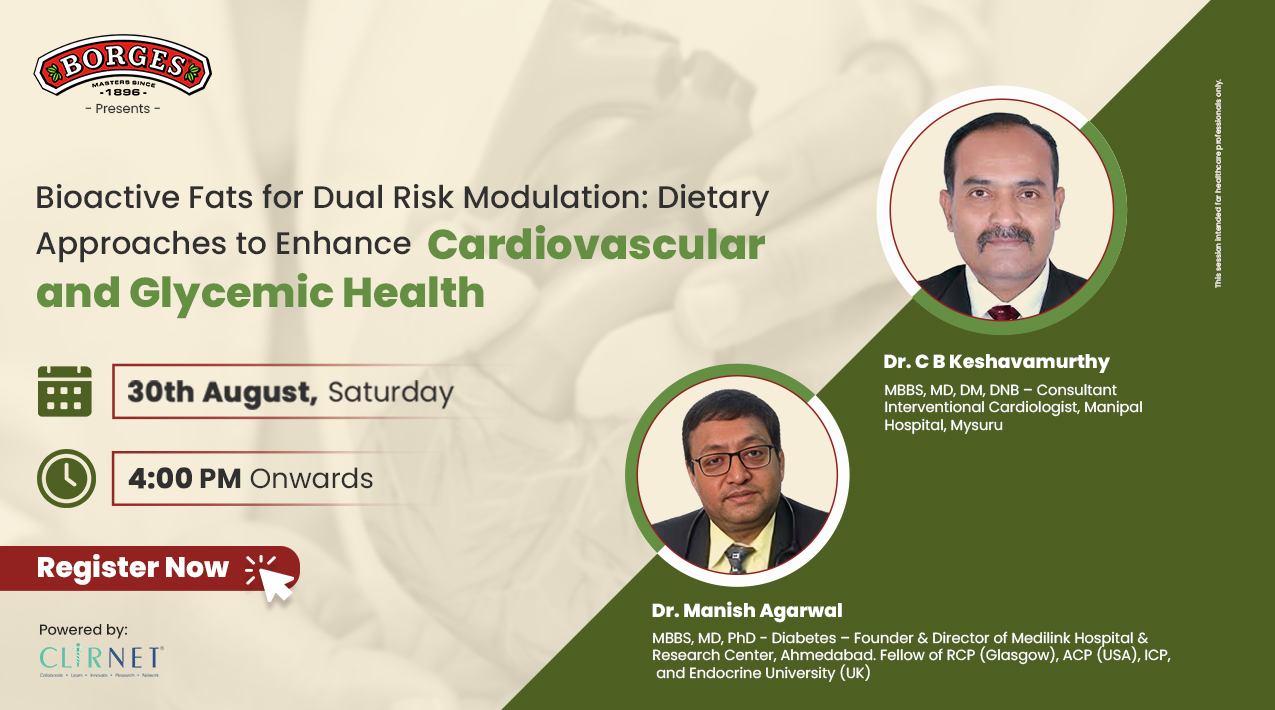
Bioactive Fats for Dual Risk Modulation: Dietary Approaches to Enhance Cardiovascular and Glycemic Health
Bioactive fats, including omega-3 fatty acids, monounsaturated fats, and specific medium-chain triglycerides, play a pivotal role in modulating both cardiovascular and glycemic health. These functional lipids exert anti-inflammatory, anti-atherogenic, and insulin-sensitising effects, contributing to improved endothelial function, lipid profile, and glucose metabolism. Dietary incorporation of sources such as fatty fish, nuts, seeds, olive oil, and fortified functional foods has been shown to reduce cardiovascular risk while enhancing glycemic control in individuals with or at risk of diabetes. Integrating bioactive fats into balanced dietary patterns offers a dual therapeutic advantage, supporting prevention and management of cardiometabolic disorders in clinical practice.

Article
Clinical Insights into Olive Oil Bioactive Fats: Implications for Cardiovascular and Glycemic Health
Olive oil supports cardiovascular and glycemic health by reducing LDL oxidation, lowering inflammation, improving insulin sensitivity, and enhancing endothelial function. Three types cater to different culinary needs while preserving health benefits: extra virgin olive oil is ideal for drizzling and low-heat cooking, olive oil for Indian cooking is suitable for high-heat applications, and classic olive oil is the best for Mediterranean and specialty dishes, maintaining flavor and stability. In clinical trials, olive oil demonstrated improvements in lipid profiles, HbA1c, and HOMA-IR, highlighting its role in dual risk reduction for cardiovascular disease and type 2 diabetes.

Short Article
Dietary Bioactive Fats from Olive Oil Clinical Perspectives on Cardiovascular and Glycemic Benefits
Olive oil is a heart- and metabolism-friendly dietary fat that contributes to cardiovascular protection and glycemic control. It exerts its benefits by mitigating LDL oxidation, reducing inflammatory processes, enhancing insulin sensitivity, and supporting endothelial function. Different types of olive oil cater to diverse culinary practices without compromising their health-promoting properties. Extra virgin olive oil is ideal for low-heat applications, while olive oil designed for Indian cooking withstands a high smoke point. Classic olive oil offers a robust flavor suited for Mediterranean and specialty recipes. Clinical studies link regular olive oil consumption with improved lipid parameters, lower HbA1c, and reduced HOMA-IR, reinforcing its role as a dual-purpose dietary strategy for cardiovascular disease and type 2 diabetes risk reduction.