
Dr. B Jagadish
Speciality: Diabetology
MBBS, MD, PGD ENDO, DFM UK, PGD GERIATRIC MEDICINE, DDIAB, FIAMS, eMBA, Dr. B Jagadish is a highly qualified and experienced healthcare professional with over 15 years of expertise in the fields of Diabetology, Preventive Cardiology, Functional and Lifestyle Medicine, and Geriatrics. He completed his MBBS and MD before further specializing with a Post Graduate Diploma in Endocrinology (PGD ENDO), Geriatric Medicine (PGD GERIATRIC MEDICINE), and Diabetes (DDIAB). He also holds an eMBA and is a Fellow of the Indian Academy of Medical Sciences (FIAMS). He has extensive experience in managing chronic diseases, focusing on preventive care, lifestyle modification, and holistic treatment approaches. He is passionate about improving the quality of life for patients through personalized care. He currently serves as the Director and Chief Consultant Diabetologist and Preventive Cardiologist, Consultant in Functional and Lifestyle Medicine, and Geriatrician, bringing his wealth of experience to his patients and community.
Related Content
Video
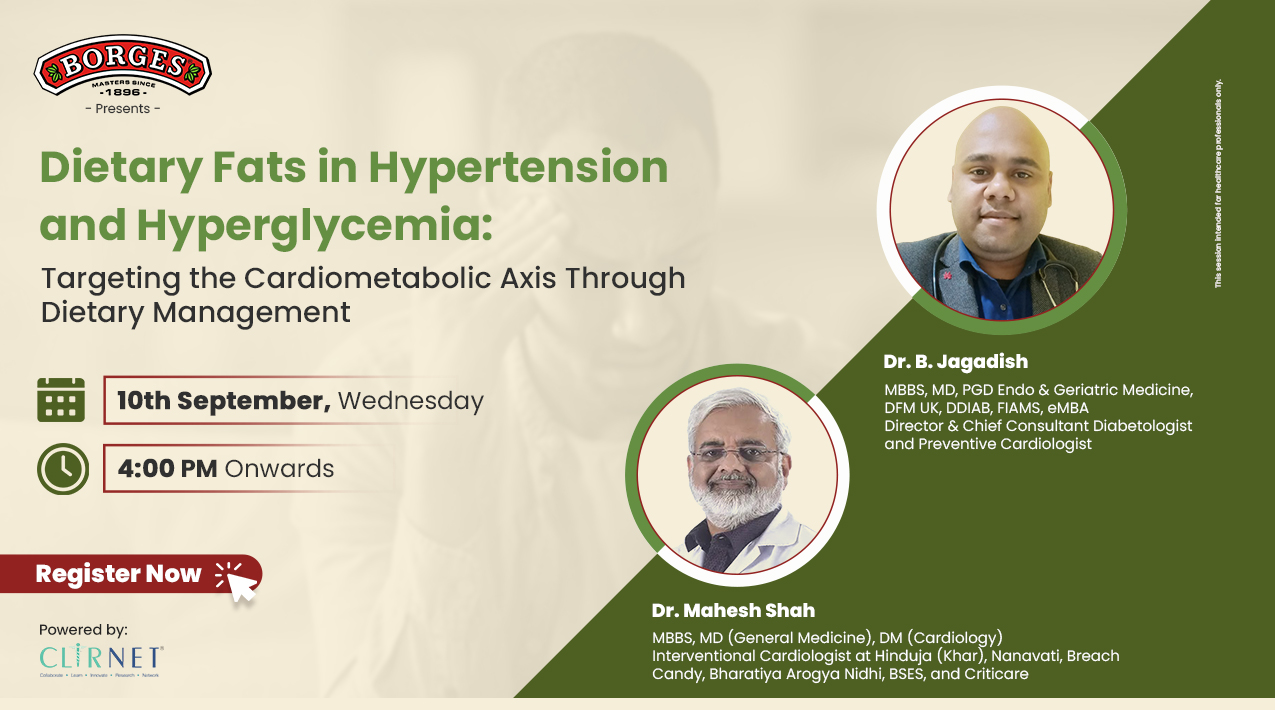
Dietary Fats in Hypertension and Hyperglycemia: Targeting the Cardiometabolic Axis Through Dietary Management
Dietary Fats in Hypertension and Hyperglycemia play a crucial role in managing cardiovascular and metabolic health. Different types of fats influence blood pressure and blood sugar levels differently. Saturated and trans fats tend to worsen hypertension and insulin resistance, while unsaturated fats, especially omega-3 and monounsaturated fats, can improve heart health and glucose control. Dietary management focusing on replacing harmful fats with healthier fats from sources like fish, nuts, and plant oils helps target the cardiometabolic axis, supporting better control of both blood pressure and blood sugar. This approach is vital in preventing complications related to these conditions.

Article
Functional Fats and the Cardiometabolic Axis: Dietary Strategies for Blood Pressure and Glycemic Control
Olive oil, rich in monounsaturated (MUFA) and polyunsaturated fatty acids (PUFA) as well as phenolic compounds, promotes cardiometabolic health by reducing LDL oxidation, enhancing endothelial function, lowering inflammatory markers, and improving insulin sensitivity and β‑cell function. Clinical studies highlight its benefits on blood pressure, lipid profiles, and postprandial glycemia, especially within Mediterranean-style dietary patterns. Its culinary versatility ensures health benefits are preserved: extra virgin olive oil is ideal for salads and low-heat cooking to retain antioxidants, olive oil for Indian cooking withstands high smoking point, and classic olive oil delivers a rich flavor for Mediterranean and specialty dishes.

Short Article
Targeting the Cardiometabolic Axis: The Role of Dietary Fats in Blood Pressure and Glycemic Control
Olive oil, a nutrient-dense source of monounsaturated and polyunsaturated fatty acids along with phenolic compounds, supports heart and metabolic health through multiple mechanisms, including reducing LDL oxidation, improving endothelial function, lowering inflammation, and enhancing insulin sensitivity and β‑cell function. Clinical trials demonstrate its positive effects on blood pressure, lipid management, and postprandial glucose control, particularly when included in Mediterranean-style diets. Its practical culinary applications help retain these health benefits: extra virgin olive oil is best for salads and gentle cooking to preserve antioxidants, olive oil formulated for Indian cooking tolerates high-heat preparation, and classic olive oil offers robust flavor for Mediterranean and specialty dishes.

Infographic
Optimizing Cardiometabolic Health Dietary Fat Approaches to Hypertension and Hyperglycemia
Olive oil, a rich source of monounsaturated and polyunsaturated fats and phenolic compounds, promotes heart and metabolic health by protecting against LDL oxidation, reducing inflammation, and supporting insulin function. Studies show it improves blood pressure, lipid levels, and post-meal glucose, particularly in Mediterranean-style diets. Culinary forms preserve its benefits: extra virgin olive oil for salads and gentle cooking, Indian-style olive oil for high-heat dishes, and classic olive oil for flavorful Mediterranean and specialty recipes.